
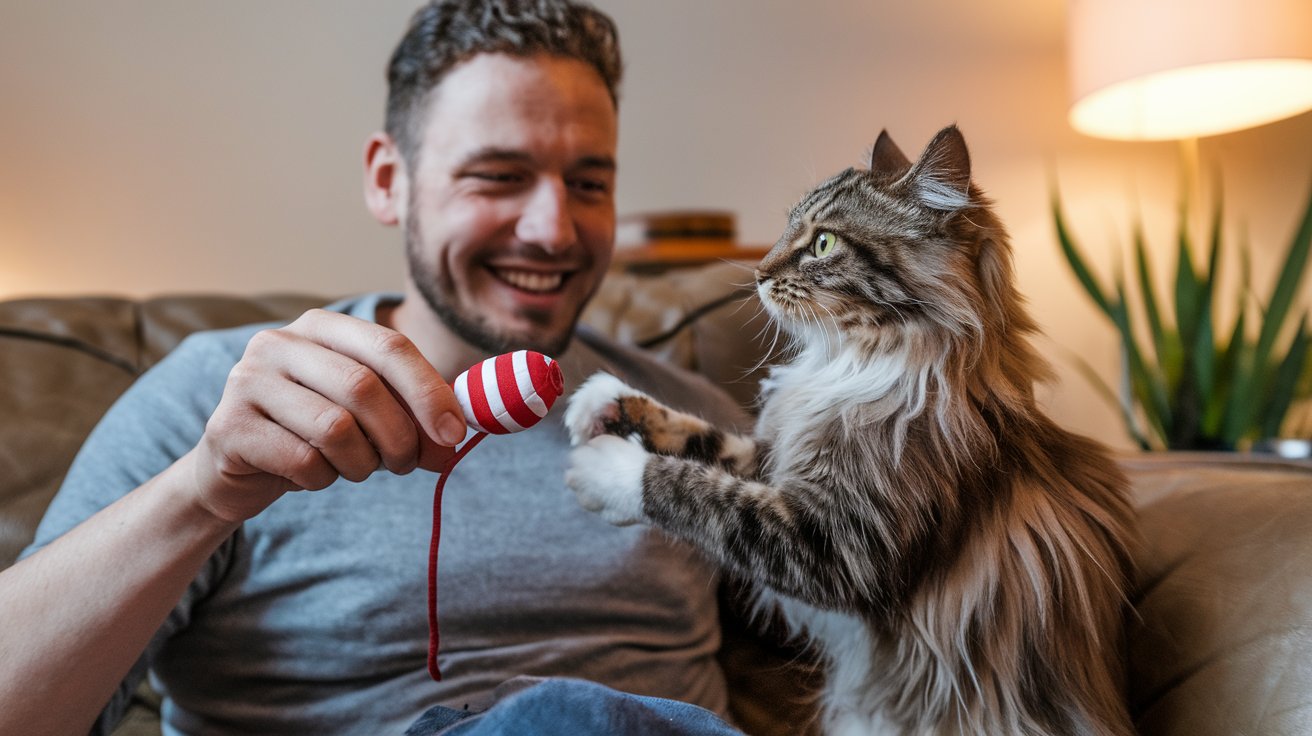
Most cat owners should play with their cats for 15-20 minutes twice daily to maintain optimal physical and mental health. Interactive play sessions are essential for indoor cats, preventing behavioral issues and obesity while strengthening the human-cat bond. The frequency and duration of play depends on your cat’s age, energy level, and living environment.
Daily Play Requirements for Indoor Cats
Indoor cats require significantly more structured play time than outdoor cats who naturally hunt and explore. Veterinarians recommend a minimum of 30 minutes of active play daily, ideally split into two 15-minute sessions. This schedule mimics natural hunting patterns where cats are most active during dawn and dusk periods. Young adult cats (1-7 years) typically need more intensive play sessions, while senior cats benefit from gentler, shorter activities.
The amount of daily play should increase for high-energy breeds like Bengals, Siamese, and Maine Coons, who may require up to 45 minutes of interactive play per day. Single-cat households often need more owner-initiated play since there’s no feline companion for natural wrestling and chasing behaviors. Research from the American Association of Feline Practitioners shows that cats receiving adequate daily play are 40% less likely to develop destructive behaviors.
Optimal Play Session Duration and Timing
Each individual play session should last 10-20 minutes to prevent overstimulation while providing adequate exercise. Sessions longer than 25 minutes can lead to stress and aggressive behavior, especially in sensitive cats. The ideal timing aligns with cats’ natural circadian rhythms: early morning (6-8 AM) and evening (6-8 PM) when their hunting instincts are strongest. Playing before meals enhances the hunting simulation and helps maintain healthy eating patterns.
Kitten play sessions should be shorter but more frequent, with 5-10 minute sessions occurring 3-4 times daily due to their higher energy levels and shorter attention spans. Senior cats (8+ years) benefit from modified play schedules with 5-15 minute sessions focusing on gentle movements that accommodate potential arthritis or mobility issues. Monitoring your cat’s breathing and energy levels helps determine when to end each session naturally.
Pre-Meal Play Strategy
Playing with your cat before feeding times creates a natural hunt-catch-eat cycle that promotes better digestion and satisfaction. This strategy is particularly effective for weight management, as cats are more motivated to chase toys when hungry. Schedule play sessions 15-30 minutes before breakfast and dinner to maximize engagement and establish healthy routines.
Bedtime Play Considerations
Evening play sessions should end 30-60 minutes before your desired bedtime to allow cats to wind down naturally. Intense play right before sleep can overstimulate cats, leading to midnight zoomies and disrupted sleep patterns. A calm cooldown period with gentle petting or quiet interaction helps transition from active play to rest mode.
Signs Your Cat Needs More Playtime
Recognizing when cats require additional interactive play helps prevent behavioral problems before they develop. Excessive meowing, especially at night, often indicates pent-up energy that needs release through structured play. Aggressive behavior toward household members, destructive scratching of furniture, and attention-seeking activities like knocking items off surfaces are classic signs of under-stimulated cats.
Overeating or rapid eating can also signal that cats are using food as entertainment due to insufficient mental stimulation from play. Weight gain in indoor cats frequently correlates with inadequate exercise and play opportunities. Cats who sleep excessively during natural active periods (dawn and dusk) may be compensating for lack of engaging activities throughout the day.
Age-Specific Play Guidelines
Kittens under 6 months require the most intensive play schedules with 4-6 short sessions daily totaling 45-60 minutes of active play. Their rapid growth and development depend on physical activity for proper muscle development and socialization skills. Kitten play should include various toy types to develop different motor skills and prevent behavioral issues in adulthood.
Adult cats (1-7 years) thrive on consistent twice-daily play sessions lasting 15-20 minutes each. This age group has the highest energy levels and hunting drive, making them most responsive to interactive toys like feather wands and laser pointers. Senior cats (8+ years) benefit from modified play focusing on gentle movements and shorter 10-15 minute sessions that accommodate potential joint issues while maintaining mental stimulation.
Kitten Play Development
Young kittens develop crucial hunting instincts through play, learning proper prey-catching techniques that contribute to their overall behavioral health. Play sessions with littermates or appropriate toys help kittens understand bite inhibition and social boundaries essential for adult cat relationships.
Senior Cat Adaptations
Senior cats may prefer puzzle toys and gentler wand toys that don’t require jumping or rapid movements. Adjusting play intensity while maintaining regular sessions helps senior cats stay mentally sharp and physically mobile despite age-related changes.
Understanding the 333 Rule for Cat Behavior
The 333 rule for cats refers to the adjustment period when cats enter new environments: 3 days to decompress, 3 weeks to learn routines, and 3 months to feel completely at home. During each phase, play requirements vary significantly as cats adapt to their surroundings and build confidence. Newly adopted cats may need shorter, gentler play sessions initially while they acclimate to their new family.
In the first 3 days, brief play sessions of 5-10 minutes help anxious cats release stress without overwhelming them. Weeks 3-6 allow for gradually increasing play duration and intensity as cats become more comfortable. By month 3, most cats have established their preferred play patterns and can engage in full-duration sessions based on their individual personalities and energy levels.
Can You Overplay with Your Cat?
Yes, it’s possible to overplay with cats, leading to overstimulation, stress, and potential aggression. Signs of overplay include excessive panting, aggressive swatting, dilated pupils, and attempts to hide or escape from play areas. Cats experiencing overplay may also display redirected aggression toward other pets or family members after sessions end.
Healthy play sessions should end when cats show natural satisfaction signals like grooming themselves, lying down calmly, or walking away from toys. Forcing continued play after cats lose interest can create negative associations with interactive activities. Most cats naturally regulate their play needs, so respecting their cues prevents overstimulation while maintaining positive play experiences.
Multi-Cat Household Play Dynamics
Cats in multi-cat households still require individual play attention from owners despite having feline companions for social interaction. While cats may play together, owner-directed play provides unique mental stimulation and strengthens individual bonds with each cat. Some cats prefer solo play sessions, while others enjoy group activities with multiple toys and family participation.
Observing natural play behaviors between cats helps determine if additional structured play is needed. Cats who engage in regular wrestling, chasing, and mutual grooming may require slightly less owner-initiated play, but interactive toy sessions remain important for full stimulation. Providing multiple play areas prevents competition and ensures each cat receives adequate exercise opportunities.
Solo vs Group Play Sessions
Individual play sessions allow owners to tailor activities to each cat’s specific preferences, energy levels, and physical capabilities. Some cats perform better with undivided attention, while others enjoy the excitement of group play with multiple family members and toys.
Managing Play Competition
Resource guarding can occur during play time in multi-cat homes, so providing multiple identical toys and separate play spaces prevents conflicts. Rotating toys and ensuring each cat has successful hunting experiences maintains positive play associations.
Best Interactive Toys and Play Methods
Feather wands remain the gold standard for interactive cat play, mimicking natural bird prey movements that trigger strong hunting responses. Laser pointers provide excellent exercise but should always end with a physical toy catch to prevent frustration from never capturing prey. Fishing rod-style toys allow owners to control movement patterns while maintaining safe distance from excited cats.
Puzzle feeders and treat-dispensing toys extend play sessions by combining mental stimulation with physical activity. These toys work especially well for food-motivated cats and can supplement traditional play sessions. Battery-operated motion toys provide independent play opportunities when owners are unavailable, though they shouldn’t replace interactive human-directed play entirely.
Health Benefits of Regular Cat Play
Regular play sessions provide crucial physical exercise that prevents obesity, maintains muscle tone, and supports cardiovascular health in indoor cats. Mental stimulation from interactive play reduces stress hormones and promotes better overall behavioral health. Cats receiving adequate daily play show reduced instances of inappropriate elimination, excessive vocalization, and destructive scratching behaviors.
The bonding aspect of interactive play strengthens relationships between cats and their owners, leading to more affectionate and well-adjusted pets. Play also serves as a diagnostic tool, helping owners notice changes in mobility, energy levels, or behavior that might indicate health issues. Veterinarians report that cats with consistent play routines recover faster from illnesses and maintain better body condition throughout their lives.
Related video about how often should you play with your cat
This video complements the article information with a practical visual demonstration.
Essential Q&A about how often should you play with your cat
How long should I play with my cat before bed?
Play with your cat for 10-15 minutes about 1 hour before your bedtime. This allows enough time for your cat to wind down after the excitement of play while still providing beneficial exercise. End bedtime play sessions with a small treat or meal to complete the natural hunt-eat-groom-sleep cycle.
Should I play with my cat every day?
Yes, daily play is essential for your cat’s physical and mental health. Indoor cats especially need 20-30 minutes of interactive play daily, split into 2-3 sessions. Consistent daily play prevents behavioral problems, maintains healthy weight, and provides necessary mental stimulation that outdoor exploration would naturally provide.
What happens if you don’t play with your cat?
Cats without adequate play become overweight, develop behavioral issues like excessive meowing or aggression, and may experience depression or anxiety. They often exhibit destructive behaviors like inappropriate scratching, overeating, or attention-seeking activities. Lack of play also weakens the human-cat bond and can lead to a less affectionate relationship.
How do you know when to stop playing with your cat?
Stop playing when your cat shows signs of satisfaction like grooming, lying down calmly, or walking away from toys. Signs of overstimulation include excessive panting, aggressive behavior, dilated pupils, or attempts to hide. Most healthy play sessions naturally end after 10-20 minutes when cats lose interest in the activity.
What is the 333 rule for cats?
The 333 rule describes cat adjustment periods: 3 days to decompress in new environments, 3 weeks to learn routines, and 3 months to feel completely settled. During each phase, play needs vary as cats adapt. New cats may need gentler, shorter play sessions initially, gradually increasing to normal duration as they become comfortable.
Can you overplay with a cat?
Yes, overplay can cause stress, overstimulation, and aggressive behavior in cats. Signs include excessive panting, dilated pupils, aggressive swatting, or attempts to escape play areas. Respect your cat’s natural cues to stop playing, typically after 15-20 minutes or when they show disinterest in continuing the activity.
| Cat Age Group | Daily Play Duration | Session Frequency |
|---|---|---|
| Kittens (0-6 months) | 45-60 minutes total | 4-6 short sessions |
| Adult Cats (1-7 years) | 30-40 minutes total | 2-3 sessions |
| Senior Cats (8+ years) | 20-30 minutes total | 2-3 gentle sessions |