
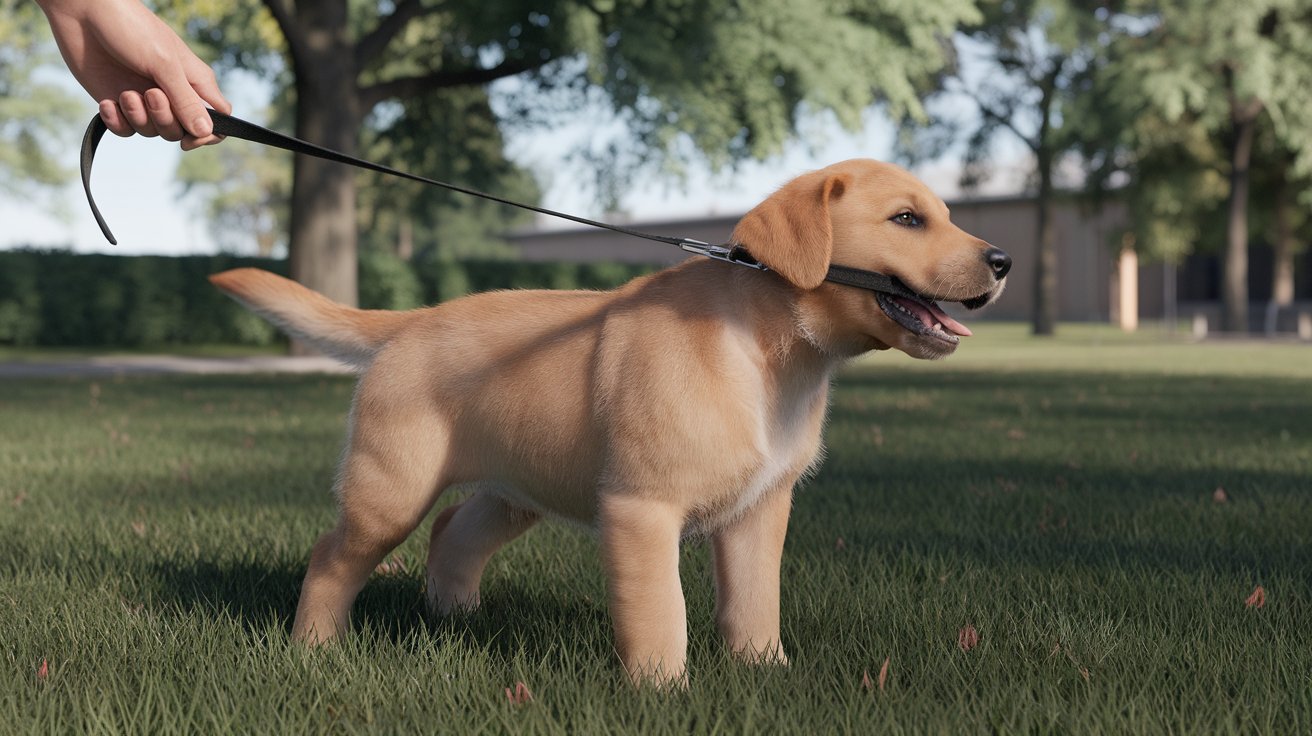
Leash biting is one of the most common behavioral challenges faced by new puppy owners across the United States. This natural behavior affects approximately 85% of puppies between 8-16 weeks old and can quickly escalate from playful nibbling to aggressive pulling and jumping. Understanding why your puppy bites the leash and implementing the right training techniques can transform frustrating walks into enjoyable bonding experiences within just a few weeks.
Understanding Why Puppies Bite Their Leash
Puppies bite leashes for several instinctive reasons that stem from their natural development process. During the critical socialization period between 8-12 weeks, puppy leash biting serves as a coping mechanism for new experiences and overstimulation. The leash represents a novel object that moves unpredictably, triggering your puppy’s prey drive and play instincts. Additionally, teething discomfort between 3-6 months old makes puppies seek relief by chewing on accessible items like leashes.
The restriction of movement that comes with leash training can also trigger frustration-based biting behavior. When puppies feel confined or unable to reach desired destinations, they may redirect their energy toward the leash itself. Understanding these underlying motivations is crucial for selecting the most effective training approach for your specific situation and puppy’s age.
Age-Specific Leash Biting Solutions
Different ages require tailored approaches to address leash biting effectively. The developmental stage of your puppy directly impacts which training methods will yield the fastest and most lasting results.
9 Week Old Puppy Leash Training
For 9 week old puppies, focus on creating positive leash associations rather than correction-based training. At this age, puppies have limited attention spans and are easily overwhelmed by new experiences. Start with short 5-minute indoor sessions where you simply attach the leash and allow your puppy to drag it around under supervision. Reward calm behavior with high-value treats and gentle praise. When your puppy chews on the leash, immediately redirect their attention to an appropriate chew toy and reward the redirection.
12-16 Week Old Puppy Training Methods
Puppies in this age range have developed better impulse control and can handle more structured training sessions. Implement the two-leash method where you attach a backup leash to prevent your puppy from gaining possession of the primary leash when they bite it. Practice strategic training by stopping movement the moment biting begins and only resuming when your puppy releases the leash. This age group responds well to consistent consequences and can learn to associate leash biting with the end of enjoyable activities.
The Two-Leash Prevention Method
The two-leash technique is one of the most effective immediate solutions for persistent leash biters. This method involves attaching two separate leashes to your puppy’s collar or harness, giving you control even when your puppy grabs one leash. When your dog starts biting the leash, you can immediately switch to the backup leash and continue your walk without engaging in a tug-of-war battle.
To implement this method successfully, use leashes of different materials or colors to help your puppy differentiate between them. Keep the backup leash slightly shorter to prevent tangling, and practice transitioning between leashes in a controlled indoor environment before taking your training outdoors. This technique is particularly effective for leash biting aggression cases where puppies become possessive or overly excited about grabbing the leash.
Strategic Training Techniques That Work
Strategic training combines timing, consistency, and positive reinforcement to eliminate leash biting behavior permanently. The key principle involves making leash biting unrewarding while simultaneously making appropriate behavior highly rewarding.
The Stop-and-Wait Method
This fundamental technique teaches your puppy that biting the leash results in immediate cessation of forward movement. The moment your puppy’s mouth touches the leash, stop walking completely and stand still like a statue. Avoid eye contact, verbal corrections, or any interaction that might reinforce the behavior. Wait patiently until your puppy releases the leash, then immediately praise and continue walking. Most puppies learn this connection within 3-5 consistent training sessions when applied correctly.
Redirection and Reward System
Successful redirection requires perfect timing and high-value rewards that are more appealing than the leash itself. The moment you notice your puppy preparing to bite the leash, immediately call their name and offer an alternative behavior like sit or look. Reward compliance with premium treats, enthusiastic praise, or brief play sessions. This proactive approach prevents the unwanted behavior from occurring while building a stronger foundation of obedience and attention.
Environmental Management Solutions
Creating the right training environment significantly impacts your success rate in stopping leash biting behavior. Environmental factors such as distractions, surface textures, and weather conditions all influence your puppy’s likelihood to engage in problematic behaviors during walks.
Start training sessions in familiar, low-distraction environments like your backyard or a quiet indoor space. Gradually increase the challenge level by introducing new surfaces, sounds, and visual stimuli as your puppy’s leash manners improve. Avoid high-stimulation environments like busy parks or crowded sidewalks until your puppy consistently demonstrates appropriate leash behavior in controlled settings.
Equipment Modifications to Reduce Biting
The right equipment can dramatically reduce your puppy’s interest in biting the leash while making training more effective. Chain leashes or rope leashes often feel unpleasant in a puppy’s mouth, naturally discouraging chewing behavior. However, ensure any chain leash is lightweight and appropriate for your puppy’s size to avoid injury.
Consider using a front-clip harness instead of a collar, as this changes the angle and tension of the leash, making it less accessible for biting. Retractable leashes should be avoided during training phases as they can encourage pulling and provide inconsistent tension that may trigger more biting episodes. A standard 6-foot training leash made of leather or nylon provides optimal control and consistency for most training scenarios.
Addressing Leash Biting Aggression
Leash biting aggression represents a more serious behavioral concern that requires immediate intervention and possibly professional guidance. This behavior is characterized by intense growling, possessive guarding of the leash, and escalated biting that may include snapping or prolonged holding. Unlike playful leash biting, aggressive behavior often stems from fear, frustration, or dominance-related issues that develop when basic leash biting is not properly addressed.
If your puppy displays signs of leash aggression, avoid punishment-based corrections which can escalate the problem. Instead, focus on counter-conditioning techniques that change your puppy’s emotional response to leash restrictions. Work with a certified positive reinforcement trainer who can assess your specific situation and develop a customized behavior modification plan. Early intervention is crucial, as aggressive leash biting can generalize to other areas of handling and training if left untreated.
Common Training Mistakes to Avoid
Many puppy owners inadvertently reinforce leash biting behavior through well-intentioned but counterproductive training approaches. Playing tug-of-war when your puppy grabs the leash teaches them that biting results in an exciting game. Similarly, yelling or making loud noises often increases excitement levels rather than discouraging the behavior.
Inconsistency in training approaches is another major obstacle to success. If family members respond differently to leash biting incidents, your puppy receives mixed messages that slow the learning process. Establish clear household rules about how everyone should respond when the puppy bites the leash, and ensure all family members follow the same protocol consistently.
Advanced Training for Persistent Cases
Some puppies require more intensive training protocols to overcome stubborn leash biting habits. Advanced techniques include impulse control exercises, attention-building games, and structured leadership exercises that address underlying behavioral patterns contributing to the problem.
Impulse Control Exercises
Teaching your puppy self-control in exciting situations directly impacts their ability to resist leash biting urges. Practice the ‘wait’ command before meals, doorway transitions, and play sessions. Start with very short durations and gradually increase the waiting period as your puppy’s impulse control improves. These exercises build the mental foundation necessary for your puppy to make better choices during leash training sessions.
Attention and Focus Training
Puppies who consistently focus on their owners are less likely to engage in problematic leash behavior. Practice name recognition games where you call your puppy’s name and reward eye contact with treats and praise. Gradually increase the level of distractions during these exercises to build reliable attention even in stimulating environments. Strong attention skills allow you to redirect your puppy’s focus before leash biting begins, making prevention much easier than correction.
Related video about how to stop puppy from biting leash
This video complements the article information with a practical visual demonstration.
Most asked questions about how to stop puppy from biting leash
How should I discipline my puppy for biting the leash?
Avoid punishment-based discipline as it can worsen leash biting behavior. Instead, use positive training methods like immediately stopping movement when biting occurs, redirecting to appropriate toys, and rewarding good behavior. Consistency and patience are more effective than corrections for puppies under 16 weeks old.
Will my puppy outgrow leash biting behavior naturally?
While some puppies may reduce leash biting as they mature, most require active training intervention. Without proper training, leash biting often escalates into more serious behavioral problems including leash aggression, pulling, and general disobedience. Early training between 8-16 weeks produces the best long-term results.
What age is best to start leash training to prevent biting?
Begin leash introduction as early as 8-9 weeks old with short indoor sessions. At this age, focus on creating positive associations rather than formal training. Structured leash training can begin around 10-12 weeks when puppies have better attention spans and impulse control development.
How long does it typically take to stop leash biting behavior?
With consistent training, most puppies show significant improvement within 1-2 weeks. Complete elimination of leash biting typically takes 3-4 weeks of daily practice sessions. Factors affecting timeline include puppy age, consistency of training, and severity of the initial behavior. Persistent cases may require 6-8 weeks of intensive training.
Can I use bitter apple spray to stop leash biting?
Bitter apple spray can be moderately effective as a deterrent when combined with positive training methods. Apply the spray to the leash before walks, but always pair this with redirection and rewards for appropriate behavior. Some puppies become accustomed to the taste, so this should not be your only training strategy.
Is leash biting different from general puppy chewing behavior?
Yes, leash biting is typically triggered by excitement, frustration, or overstimulation during walks, while general chewing is usually related to teething or boredom. Leash biting requires specific training techniques that address the environmental triggers and emotional states that cause the behavior, rather than just providing alternative chew items.
| Training Method | Best Age Range | Success Rate |
|---|---|---|
| Stop-and-Wait Method | 10-16 weeks | 85% within 2 weeks |
| Two-Leash Technique | 12+ weeks | 90% immediate improvement |
| Redirection Training | 8-12 weeks | 75% within 3 weeks |
| Environmental Management | All ages | 95% prevention rate |