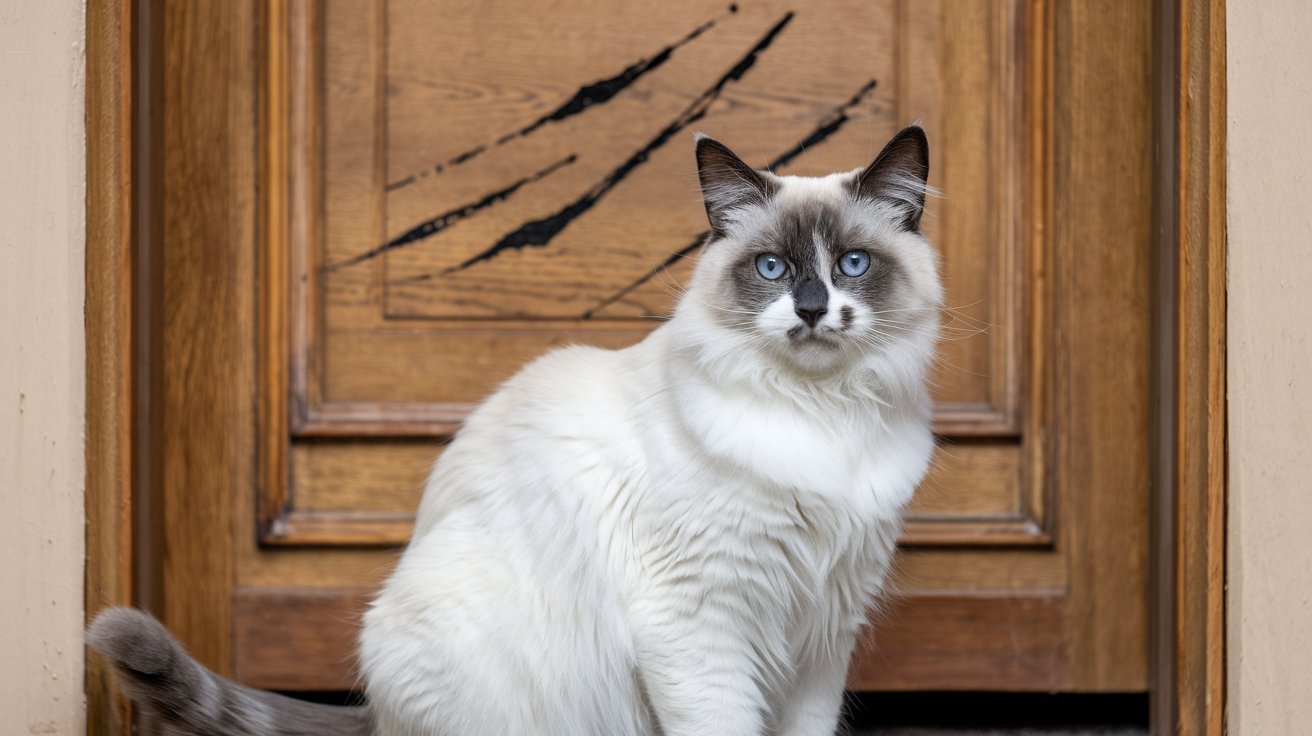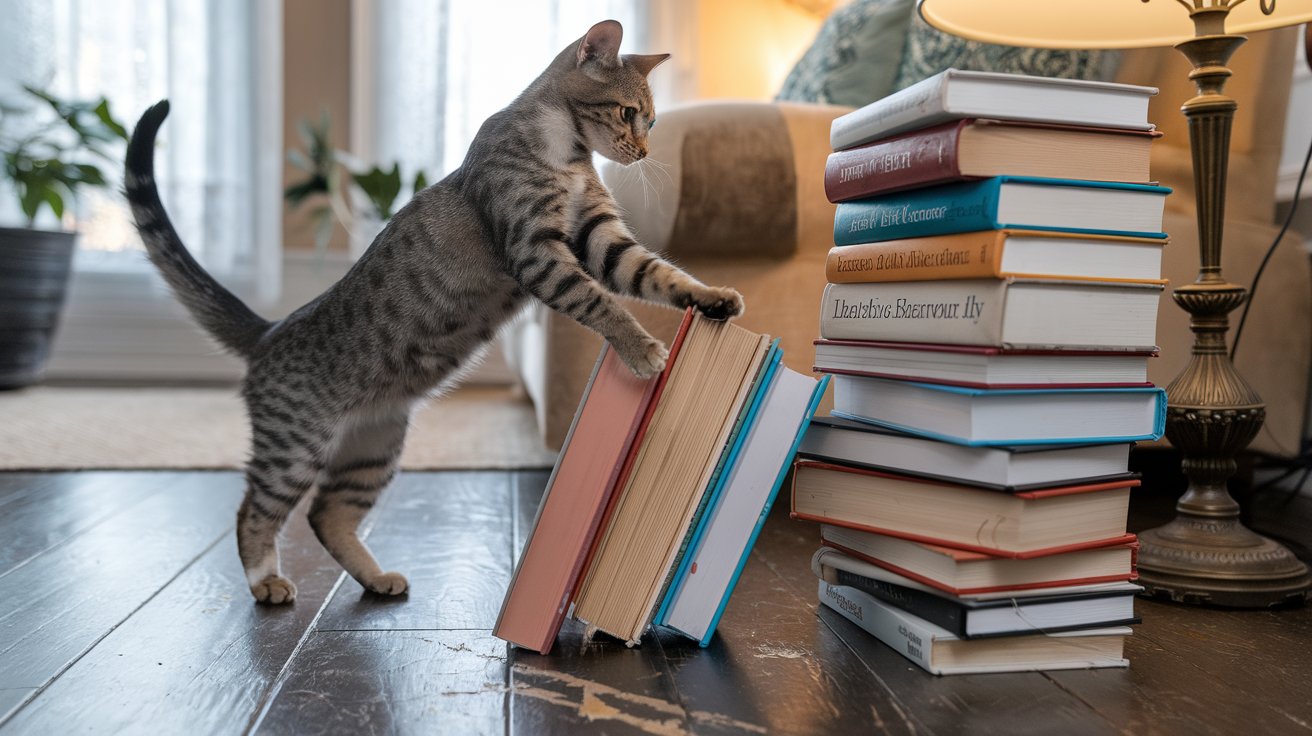
If you’ve ever wondered why does my cat knock things over, you’re not alone. This common feline behavior frustrates millions of cat owners across the United States daily. Cats knock things over due to natural hunting instincts, curiosity, attention-seeking, and territorial marking. Understanding these reasons helps you address the behavior effectively while keeping your belongings safe.
The Science Behind Why Cats Knock Things Over
Cats naturally exhibit knocking behaviors as part of their evolutionary programming. According to veterinary behaviorists, this action stems from their predatory instincts developed over thousands of years. When cats encounter objects on surfaces, they instinctively test whether items might be prey, food, or potential threats through tactile exploration.
Research from the American Association of Feline Practitioners indicates that normal cat behavior includes investigating objects through pawing motions. This behavior becomes more pronounced in indoor cats who lack sufficient environmental enrichment. The pawing motion mimics how wild cats would interact with potential prey or investigate unfamiliar objects in their territory.
Primary Reasons Why Cats Knock Things Over
Understanding the specific motivations behind your cat knocking things over helps address the root cause effectively. Multiple factors contribute to this behavior, ranging from natural instincts to environmental triggers that pet owners can identify and modify.
Hunting and Predatory Instincts
Cats possess powerful hunting instincts that drive them to investigate moving or unstable objects. When items teeter on edges or move slightly, cats interpret these as potential prey requiring investigation. This instinct remains strong even in well-fed domestic cats, explaining why your cat might knock over water cups or pens that roll when touched.
Curiosity and Exploration Behavior
Feline curiosity drives cats to explore their environment through pawing and knocking motions. Cats use their paws as sensory tools, gathering information about texture, temperature, and stability of objects. This exploratory behavior intensifies when cats encounter new items or changes in their familiar environment, leading to increased knocking incidents.
Attention-Seeking and Social Reasons
Many cats learn that knocking things over effectively captures their owner’s attention, even if the response is negative. This learned behavior reinforces itself when owners consistently react to the knocking behavior, creating a cycle where cats repeat the action to gain interaction.
Seeking Owner Interaction
Cats often develop attention-seeking behaviors when they feel ignored or want interaction. Knocking items off tables guarantees an immediate response from owners, making this behavior self-reinforcing. Studies show that cats prefer any attention, including negative responses, over being ignored completely.
Boredom and Lack of Stimulation
Insufficient mental stimulation leads cats to create their own entertainment through destructive behaviors like knocking. Indoor cats particularly struggle with boredom, especially when left alone for extended periods. This behavior peaks during evening hours when cats naturally become more active and playful.
Why Cats Knock Things Over at Night
Nighttime knocking intensifies because cats are naturally nocturnal creatures with peak activity periods during dawn and dusk hours. Your cat’s internal clock drives increased energy and hunting behaviors during these times, leading to more frequent investigation of objects throughout your home.
Environmental factors also contribute to nighttime knocking. Reduced human activity means cats feel more confident exploring surfaces they might avoid during busy daytime hours. Additionally, shadows and changing light patterns can make stationary objects appear more interesting or prey-like to cats during nighttime exploration.
Territorial and Scent Marking Behaviors
Cats possess scent glands in their paw pads that release pheromones when they knock and paw objects. This scent marking behavior helps cats claim territory and communicate with other pets in the household. Objects that smell like other animals or unfamiliar scents often become targets for this territorial marking behavior.
Multi-cat households frequently experience increased knocking behaviors as cats compete for territorial dominance. Each cat attempts to establish ownership over spaces and objects through scent marking, leading to repeated knocking of items in contested areas like countertops and windowsills.
Food-Related Knocking Behaviors
Hunger drives specific knocking behaviors when cats associate certain objects or locations with feeding time. Cats often knock over items near their food bowls or in kitchen areas when they want to signal meal time to their owners. This behavior becomes more pronounced in cats fed on strict schedules.
Water-related knocking frequently occurs when cats prefer moving water sources over stagnant bowls. Many cats knock over water cups to create movement and splashing, which appeals to their preference for fresh, moving water. This behavior often indicates cats would benefit from water fountains or dripping faucet access.
How to Stop Your Cat from Knocking Things Over
Effective prevention requires understanding your cat’s specific motivations and implementing targeted behavior modification strategies. Successful approaches combine environmental management with positive reinforcement training to redirect your cat’s natural behaviors toward appropriate outlets.
Environmental Modifications
Remove tempting objects from accessible surfaces and replace them with cat-safe alternatives. Use museum wax or adhesive strips to secure lightweight decorations, and consider installing floating shelves exclusively for your cat’s use. Creating designated cat zones with appropriate toys reduces their interest in forbidden objects.
Positive Reinforcement Training
Reward your cat for appropriate behaviors while ignoring knocking incidents to avoid reinforcing attention-seeking. Provide engaging toys and puzzle feeders to redirect their natural hunting instincts toward acceptable targets. Consistency in training approaches across all household members ensures faster behavioral changes.
When Knocking Behavior Indicates Health Issues
Sudden increases in knocking behavior sometimes indicate underlying health problems requiring veterinary evaluation. Hyperthyroidism, cognitive dysfunction, and vision problems can cause changes in normal behavioral patterns. Senior cats particularly benefit from health screenings when exhibiting new or intensified knocking behaviors.
Stress-related knocking often accompanies major household changes like moving, new pets, or schedule disruptions. These situations require patience and gradual environmental adjustment strategies to help cats adapt without developing problematic behaviors. Professional animal behaviorist consultation may benefit cats with severe or persistent knocking issues.
Related video about why does my cat knock things over
This video complements the article information with a practical visual demonstration.
Questions & Answers
Why do cats purposely knock things over?
Cats knock things over due to natural hunting instincts, curiosity, and attention-seeking behaviors. This purposeful action helps them investigate objects, mark territory with scent glands in their paws, and communicate with their owners. It’s completely normal feline behavior rooted in evolutionary survival mechanisms.
How do I stop my cat from knocking things over?
Stop cats from knocking by removing tempting objects from surfaces, providing engaging toys for mental stimulation, and ignoring the behavior to avoid reinforcing attention-seeking. Create cat-specific zones with appropriate items and use positive reinforcement when they interact with designated toys instead of household objects.
Is knocking things over normal for cats?
Yes, knocking things over is completely normal cat behavior. This action stems from natural hunting instincts, territorial marking, and exploratory behaviors. Most cats exhibit this behavior regardless of age, breed, or training, though intensity varies based on individual personality and environmental factors.
Why does my cat knock things over at night?
Cats knock things over at night because they’re naturally crepuscular animals with peak activity during dawn and dusk hours. Reduced human activity allows cats to explore surfaces more freely, while changing light patterns and shadows make objects appear more interesting or prey-like during nighttime hours.
Why do cats knock over cups of water?
Cats knock over water cups because they prefer moving water sources and use pawing to test water freshness and temperature. This behavior also helps cats determine water depth and creates movement that appeals to their hunting instincts. Many cats benefit from water fountains to satisfy this preference safely.
Can stress cause increased knocking behavior?
Yes, stress significantly increases knocking behavior in cats. Major household changes, new pets, schedule disruptions, or environmental stressors can trigger increased object investigation and territorial marking. Stressed cats often exhibit more intense knocking as a coping mechanism and attention-seeking strategy.
| Behavior Trigger | Prevention Strategy | Expected Outcome |
|---|---|---|
| Hunting Instincts | Provide interactive toys and puzzle feeders | Redirected energy toward appropriate targets |
| Attention Seeking | Ignore knocking, reward good behavior | Reduced attention-seeking incidents |
| Boredom | Increase environmental enrichment | Better mental stimulation and satisfaction |
| Territorial Marking | Create designated cat zones | Satisfied territorial needs in appropriate areas |