
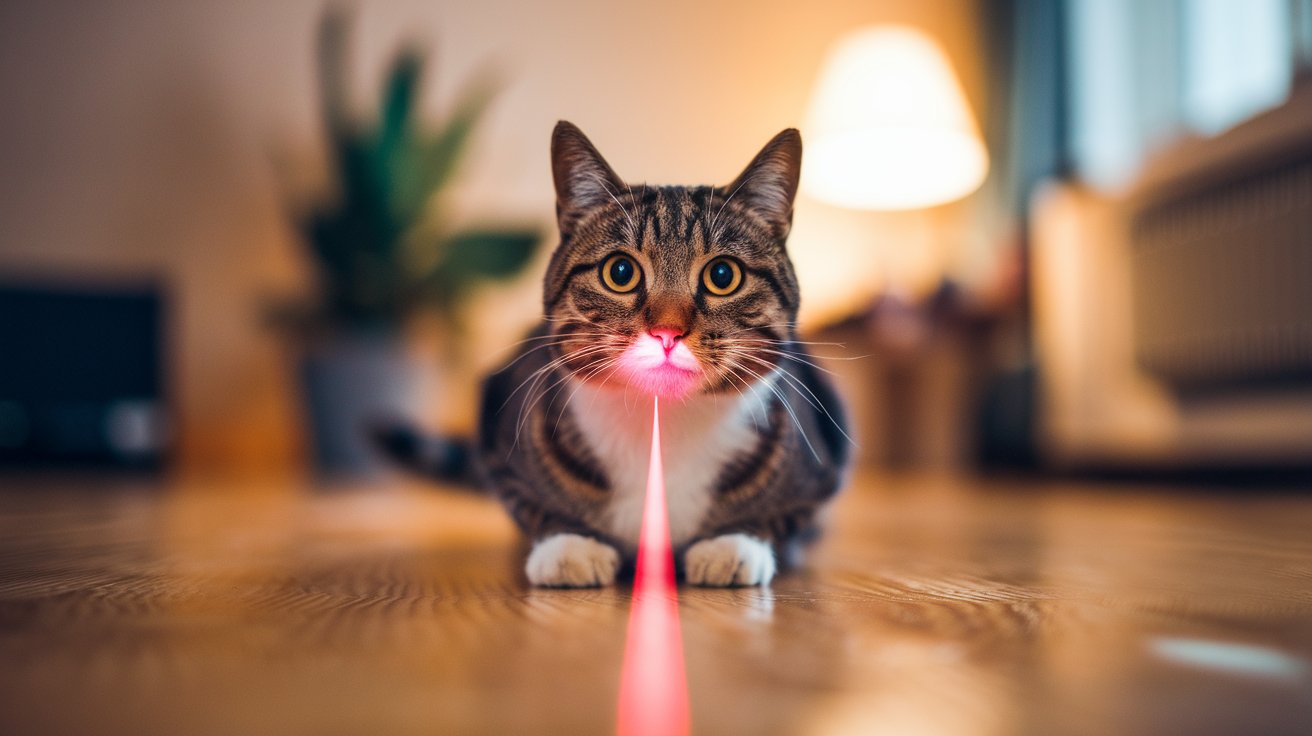
Many cat owners wonder why are laser pointers bad for cats after noticing behavioral changes in their pets. While these devices seem like harmless entertainment, veterinary behaviorists have identified serious psychological risks including frustration, anxiety, and obsessive behaviors that can develop from the inability to physically catch the elusive red dot.
Understanding Laser Pointer Syndrome in Cats
Laser pointer syndrome represents a significant behavioral concern where cats develop obsessive and compulsive behaviors from prolonged exposure to laser pointers. This condition affects approximately 15-20% of cats regularly exposed to laser play, according to 2024 veterinary behavioral studies. The syndrome manifests as constant searching for light reflections, shadow chasing, and heightened anxiety levels that persist even when the laser isn’t present.
The psychological impact stems from the cat’s natural hunting instincts being repeatedly triggered without successful completion. Unlike traditional prey that can be caught and consumed, the laser pointer creates an endless cycle of frustration because cats can never physically capture their target. This unfulfilled hunting sequence disrupts their natural behavioral patterns and can lead to chronic stress responses.
The Science Behind Cat Hunting Behavior and Laser Frustration
Cats possess a hardwired hunting sequence consisting of search, stalk, chase, pounce, kill, and consume phases. When using laser pointers with cats, only the first four phases are activated, leaving the crucial completion stages unfulfilled. This incomplete cycle triggers neurochemical imbalances in the brain, particularly affecting dopamine and serotonin levels that regulate satisfaction and mood.
Research conducted by the American Association of Feline Practitioners in 2024 revealed that cats experiencing incomplete hunting sequences show elevated cortisol levels for up to 6 hours after laser play sessions. The cruel aspect of laser pointer play lies not in malicious intent, but in the psychological torment of never achieving the satisfying conclusion that their instincts demand.
Physical and Mental Health Risks
The physical dangers of laser pointers extend beyond behavioral issues to include serious eye damage risks. Direct exposure to laser light can cause permanent retinal damage, with Class 3R lasers (common in pet toys) capable of causing immediate injury at close range. The symptoms of laser pointer syndrome in cats include excessive panting, destructive scratching, and compulsive light-chasing behaviors that interfere with normal daily activities.
Mental health consequences manifest as increased anxiety, depression-like symptoms, and social withdrawal. Cats may become less interactive with family members, show reduced appetite, and develop sleep disturbances. These psychological effects of laser pointers can persist for weeks or months after discontinuing use, requiring professional behavioral intervention in severe cases.
Age-Specific Concerns: Are Laser Pointers Bad for Kittens
Kittens face heightened risks from laser pointer exposure due to their developing neurological systems and learning patterns. During the critical socialization period (3-16 weeks), inappropriate play experiences can establish maladaptive behavioral patterns that persist into adulthood. Laser pointer use with kittens can interfere with proper prey recognition and hunting skill development, potentially creating lifelong behavioral abnormalities.
Young cats exposed to laser pointers during their formative months show higher rates of shadow obsession and light sensitivity compared to those introduced to appropriate prey-simulating toys. The developmental impact on kittens includes impaired social play skills and difficulty engaging with traditional cat toys that require physical manipulation and capture.
Comparing Risks: Cats vs Dogs and Laser Pointer Safety
The question of why are laser pointers okay for cats but not dogs reveals important species differences in hunting behavior and frustration tolerance. However, current veterinary consensus suggests laser pointers pose risks to both species, with cats showing more pronounced psychological effects due to their solitary hunting nature and stronger prey drive completion requirements.
Dogs typically exhibit less severe behavioral consequences because their pack hunting instincts allow for shared success experiences and their play behavior is more socially oriented. Nevertheless, laser pointers are bad for dogs as well, causing similar obsessive light-chasing behaviors and potential eye damage. The 2024 American Veterinary Medical Association guidelines recommend avoiding laser pointer use with all companion animals.
Safe Alternatives to Laser Pointers for Cat Exercise
Effective alternatives to laser pointers focus on providing complete hunting experiences through interactive toys that cats can physically capture. Feather wands, motorized mice, and treat-dispensing puzzle toys satisfy the entire predatory sequence while providing mental stimulation and physical exercise. These toys allow cats to experience the satisfaction of successful prey capture, maintaining healthy psychological balance.
Motion-activated toys and remote-controlled mice offer similar unpredictable movement patterns without the frustration factor. Interactive cat toys that incorporate food rewards create positive associations and complete the hunt-catch-consume cycle naturally. Modern cat exercise wheels and climbing structures provide physical outlet while respecting feline behavioral needs.
Expert Recommendations and Jackson Galaxy’s Position
Renowned cat behaviorist Jackson Galaxy strongly advises against laser pointer use, citing the psychological harm and behavioral disruption they cause. His position, supported by the International Association of Animal Behavior Consultants, emphasizes that laser pointers create more problems than they solve in terms of cat exercise and entertainment. Galaxy recommends ending any laser play session with a physical toy the cat can catch to provide closure.
Veterinary behaviorists recommend a complete transition away from laser pointers, replacing them with prey-mimicking toys that engage multiple senses. The expert consensus on laser pointer safety has shifted significantly since 2020, with most professionals now discouraging their use entirely rather than suggesting modified play protocols.
Modern Cat Laser Pointer Apps and Digital Alternatives
The rise of cat laser pointer apps for smartphones and tablets presents new concerns about screen time and digital play safety. While these apps eliminate direct laser exposure, they still perpetuate the same frustration-inducing incomplete hunting cycles that traditional laser pointers create. Digital alternatives should incorporate touchable elements or conclude with tangible rewards to avoid psychological harm.
Some innovative apps now combine virtual elements with physical toys, using augmented reality to guide cats toward actual catchable objects. These hybrid digital play solutions represent a safer evolution of electronic cat entertainment, though traditional interactive toys remain the gold standard for healthy feline exercise and mental stimulation.
Creating Healthy Exercise Routines Without Laser Pointers
Establishing effective exercise routines requires understanding individual cat personalities and energy levels. High-energy cats need 2-3 intensive play sessions daily, each lasting 10-15 minutes, using toys that simulate natural prey movements. Healthy cat exercise routines incorporate variety, scheduling, and completion rewards to maintain long-term engagement without behavioral side effects.
Successful play sessions follow the hunt-catch-eat pattern by concluding with small treats or meals. This natural sequence satisfies instinctual needs while providing physical exercise and mental stimulation. Structured playtime schedules help cats anticipate and prepare for activity, reducing anxiety and promoting better overall behavioral health compared to unpredictable laser pointer sessions.
Recognizing and Treating Laser Pointer Damage
Early recognition of laser pointer syndrome symptoms enables prompt intervention before behaviors become deeply ingrained. Warning signs include obsessive shadow chasing, constant vigilance for light reflections, decreased interest in normal toys, and increased vocalization or restlessness. Cats may also develop specific triggers around smartphones, flashlights, or reflective surfaces.
Treatment protocols involve environmental management, behavioral modification, and sometimes anti-anxiety medications prescribed by veterinarians. Recovery typically requires 4-8 weeks of consistent intervention, including enrichment activities and gradual reintroduction to appropriate play. Professional behavioral therapy may be necessary for severe cases where cats show persistent compulsive behaviors or significant stress responses.
Related video about why are laser pointers bad for cats
This video complements the article information with a practical visual demonstration.
FAQ – Common Questions
Is it okay to play with laser pointers with cats?
No, it’s not recommended to play with laser pointers with cats. Veterinary behaviorists now advise against laser pointer use due to the psychological frustration it causes. The inability to physically catch the red dot can lead to anxiety, obsessive behaviors, and laser pointer syndrome in up to 20% of cats regularly exposed to this type of play.
Is it cruel to tease a cat with a laser pointer?
Yes, using laser pointers can be considered cruel from a behavioral perspective. While not intentionally malicious, laser pointers create psychological torment by triggering hunting instincts without allowing successful completion. This incomplete hunting sequence causes chronic frustration and can develop into compulsive light-chasing behaviors that interfere with normal cat behavior.
Do cats get depressed with lasers?
Cats can develop depression-like symptoms from laser pointer use, including social withdrawal, reduced appetite, and decreased interest in normal activities. The constant frustration from never catching their prey triggers elevated cortisol levels and neurochemical imbalances that affect mood regulation. These symptoms can persist for weeks after discontinuing laser play.
Why are laser pointers okay for cats but not dogs?
Actually, current veterinary consensus indicates laser pointers are harmful to both cats and dogs. While cats may show more severe psychological effects due to their solitary hunting nature and stronger prey drive, dogs also develop obsessive light-chasing behaviors and risk eye damage. The 2024 AVMA guidelines recommend avoiding laser pointers with all companion animals.
Do laser pointers hurt cats eyes?
Yes, laser pointers can cause permanent eye damage in cats. Direct exposure to laser light, especially from Class 3R lasers common in pet toys, can cause immediate retinal damage. Even indirect exposure poses risks, and cats’ natural curiosity makes them more likely to look directly at the light source, increasing injury potential.
What are the symptoms of laser pointer syndrome in cats?
Laser pointer syndrome symptoms include obsessive shadow and light chasing, constant vigilance for reflections, decreased interest in normal toys, excessive vocalization, destructive scratching, and compulsive behaviors that persist even when the laser isn’t present. Affected cats may also show increased anxiety, sleep disturbances, and social withdrawal from family members.
| Risk Factor | Impact Details | Healthy Alternative |
|---|---|---|
| Psychological Frustration | Incomplete hunting cycle causes anxiety and obsessive behaviors in 15-20% of cats | Interactive feather wands and catchable toys |
| Eye Damage Risk | Direct laser exposure can cause permanent retinal damage | Motion-activated toys without light elements |
| Behavioral Development | Interferes with natural prey recognition and hunting skills | Prey-mimicking toys that complete hunt sequence |
| Mental Health | Can cause depression-like symptoms and social withdrawal | Treat-dispensing puzzle toys for satisfaction |