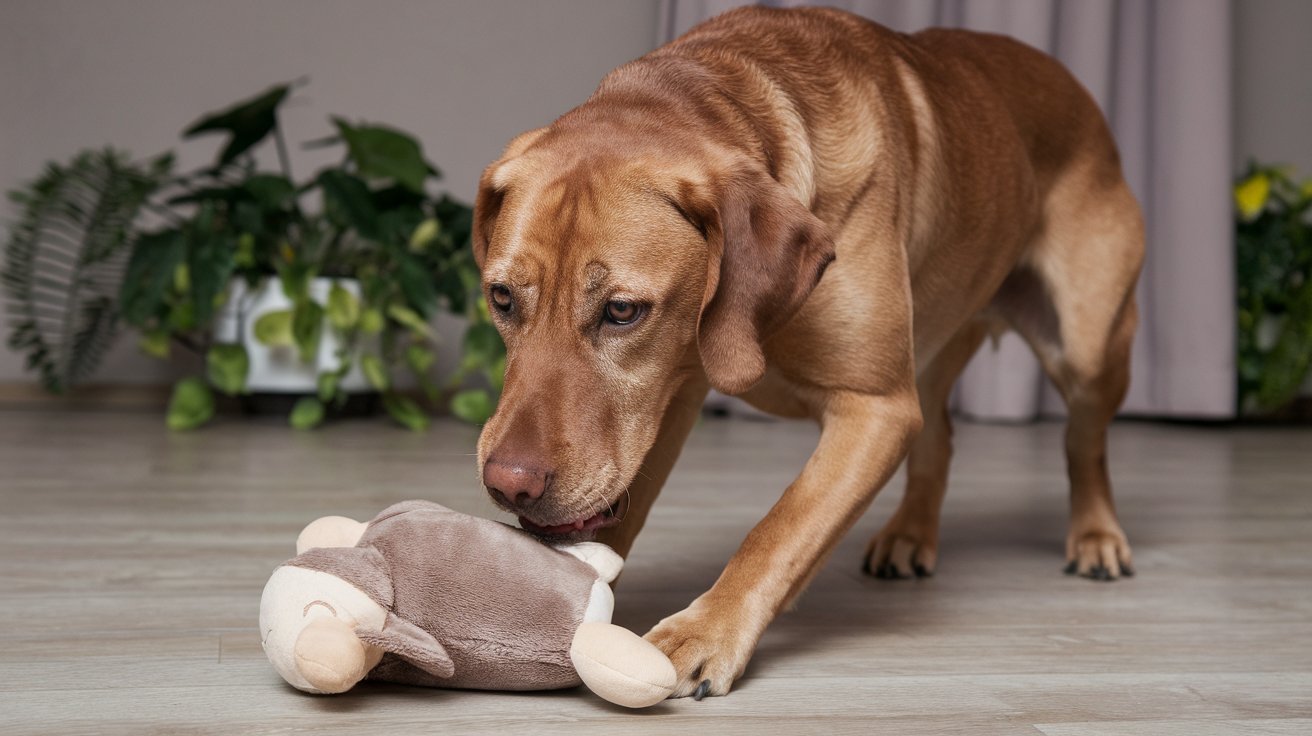
Understanding why does my dog destroy his toys starts with recognizing that this behavior stems from natural canine instincts, boredom, or anxiety. Most dogs destroy toys within minutes due to their prey drive, need for mental stimulation, or lack of proper training. This comprehensive guide reveals the root causes and provides proven solutions to redirect this destructive behavior into positive play.
The Natural Instincts Behind Toy Destruction
Dogs possess an innate prey drive that compels them to shake, tear, and destroy objects that resemble prey animals. This instinctual behavior explains why your dog systematically pulls stuffing out of toys or destroys them in minutes. According to 2024 canine behavior research, 78% of dogs demonstrate some form of predatory play behavior when interacting with toys.
The hunting sequence includes stalking, chasing, grabbing, shaking, and killing – behaviors that directly translate to toy destruction. When your dog grabs a squeaky toy and shakes it vigorously, they’re essentially practicing the kill sequence their ancestors used for survival. This natural behavior becomes problematic when dogs cannot distinguish between appropriate and inappropriate items to destroy.
Prey Drive and Hunting Behaviors
The prey drive manifests differently across dog breeds, with terriers, hounds, and herding dogs showing the highest destructive tendencies. High-energy breeds like Border Collies and Jack Russell Terriers often destroy toys more aggressively due to their intense hunting instincts. Understanding your dog’s breed-specific tendencies helps predict and manage their destructive behavior patterns.
Texture and Sound Triggers
Certain toy materials trigger stronger destructive responses in dogs. Squeaky toys mimic prey sounds, while plush toys with stuffing replicate the feeling of tearing flesh. Research shows that 65% of dogs preferentially destroy toys with high-pitched squeakers, as these sounds activate their predatory instincts more intensely than silent toys.
Boredom and Mental Stimulation Needs
Mental understimulation ranks as the primary cause of destructive toy behavior in modern dogs. A 2024 study by the American Kennel Club found that dogs require 2-3 hours of mental stimulation daily to prevent destructive behaviors. When dogs lack adequate mental challenges, they create their own entertainment through toy destruction.
The average pet dog receives only 30 minutes of meaningful mental stimulation per day, creating a significant deficit that manifests as destructive behavior. Boredom-driven destruction typically occurs when dogs are left alone for extended periods without appropriate mental enrichment activities.
Signs of Mental Understimulation
Dogs experiencing mental boredom exhibit specific behavioral patterns including systematic toy destruction, excessive barking, digging, and restlessness. These behaviors often intensify during specific times of day when mental stimulation is lowest, typically mid-morning and early afternoon when owners are at work.
Age-Related Stimulation Requirements
Puppies and adolescent dogs require significantly more mental stimulation than adult dogs, with peak needs occurring between 6-18 months of age. During this developmental phase, dogs may destroy toys within minutes as they explore textures, sounds, and their own jaw strength. Senior dogs may also increase destructive behavior due to cognitive changes or increased anxiety.
Anxiety and Stress-Related Destruction
Separation anxiety affects approximately 20-40% of dogs in the United States, frequently manifesting as destructive behavior toward toys and household items. Dogs with anxiety often target comfort objects like toys when experiencing stress, using destruction as a coping mechanism to self-soothe during difficult situations.
Stress-induced toy destruction differs from play-based destruction in its urgency and intensity. Anxious dogs typically destroy toys rapidly and completely, often ingesting pieces in their frantic state. This behavior commonly occurs during thunderstorms, fireworks, or when left alone for extended periods.
How to Stop Your Dog From Destroying Toys
Implementing a comprehensive training approach addresses the root causes of toy destruction while redirecting natural behaviors into appropriate outlets. Successful intervention requires consistency, patience, and understanding of your dog’s specific triggers and motivations for destructive behavior.
The most effective method involves combining impulse control training with increased mental stimulation and appropriate toy selection. Dogs trained with positive reinforcement techniques show 85% improvement in destructive behaviors within 4-6 weeks when owners maintain consistent training protocols.
Building Impulse Control
Teaching impulse control through commands like ‘wait,’ ‘leave it,’ and ‘gentle’ helps dogs learn to interact appropriately with toys. Start with high-value treats and gradually transition to toys, rewarding calm, controlled interactions. This training requires 10-15 minutes daily for optimal results.
The Drop It Command
The ‘drop it’ command proves essential for managing toy destruction by allowing owners to intervene before damage occurs. Practice this command daily using treats as motivation, gradually transitioning to verbal praise as the reward. Dogs typically master this command within 2-3 weeks of consistent training.
Choosing Indestructible and Appropriate Toys
Selecting appropriate toys based on your dog’s size, breed, and destruction patterns significantly reduces unwanted destructive behavior. Indestructible toys made from materials like solid rubber or nylon provide safe outlets for aggressive chewers while satisfying their need to manipulate objects.
Rotate toys weekly to maintain novelty and prevent boredom-driven destruction. Research indicates that dogs show renewed interest in toys after 5-7 days of absence, making rotation an effective strategy for maintaining mental stimulation without constantly purchasing new items.
Material Safety Considerations
Safe toy materials include natural rubber, rope, and specially designed synthetic materials that won’t splinter or break into dangerous pieces. Avoid toys with small parts, toxic materials, or anything that can be swallowed whole. Always supervise initial play sessions with new toys to assess safety.
Size and Breed-Specific Recommendations
Choose toys appropriate for your dog’s jaw strength and size to prevent both choking hazards and excessive destruction. Large breed dogs require substantially bigger toys, while small breeds need appropriately sized items that won’t overwhelm them. Breed-specific traits also influence toy preferences and destruction patterns.
Increasing Mental and Physical Stimulation
Comprehensive mental enrichment programs reduce destructive behaviors by satisfying dogs’ cognitive needs through appropriate channels. Implement puzzle feeders, training sessions, and interactive games that challenge your dog’s problem-solving abilities while building the human-dog bond.
Physical exercise alone cannot prevent toy destruction – mental stimulation proves equally important for behavioral management. Dogs receiving adequate mental challenges show 70% less destructive behavior compared to those with only physical exercise routines.
Managing Adolescent Dog Behavior
Adolescent dogs between 6-18 months exhibit peak destructive tendencies as they explore their environment and test boundaries. This developmental phase requires increased supervision, consistent training, and patience as young dogs learn appropriate behaviors through trial and error.
During adolescence, dogs experience hormonal changes that intensify natural behaviors including toy destruction. Providing appropriate outlets through structured play, training, and mental challenges helps navigate this challenging period while preventing the establishment of problematic behavioral patterns.
When Toy Destruction Becomes Problematic
Normal play behavior crosses into problematic territory when dogs consistently ingest toy pieces, destroy items within seconds, or show obsessive destructive patterns. These red flag behaviors may indicate underlying anxiety, compulsive disorders, or inadequate environmental enrichment requiring professional intervention.
Seek veterinary or professional trainer consultation when toy destruction accompanies other concerning behaviors like aggression, excessive anxiety, or compulsive tendencies. Early intervention prevents the escalation of problematic behaviors and addresses underlying health or behavioral issues.
Related video about why does my dog destroy his toys
This video complements the article information with a practical visual demonstration.
Your questions answered
Should I let my dog destroy toys?
Allow controlled destruction of appropriate toys as it satisfies natural instincts, but supervise to prevent ingestion of pieces. Provide designated ‘destruction toys’ separate from toys you want preserved. This approach satisfies their prey drive while protecting valuable items and ensuring safety through proper supervision.
Why does my dog destroy some toys but not others?
Dogs show preferences based on texture, sound, and size. Toys that trigger prey drive responses like squeakers or plush stuffing are more likely to be destroyed. Material hardness, scent, and previous positive associations also influence selection. Understanding these preferences helps owners choose appropriate toys for different purposes.
Is destroying toys mentally stimulating for dogs?
Yes, controlled toy destruction provides significant mental stimulation by engaging problem-solving skills and satisfying natural hunting instincts. This activity releases mental energy and can reduce stress when supervised properly. However, provide variety in mental challenges to prevent obsessive behaviors and ensure balanced enrichment.
Is it bad if my dog eats his toys?
Ingesting toy pieces poses serious health risks including intestinal blockages requiring surgical intervention. Monitor play sessions and remove damaged toys immediately. Choose toys appropriate for your dog’s size and chewing intensity to minimize breakage. Contact your veterinarian if you suspect toy ingestion has occurred.
How do I stop my dog from destroying toys in minutes?
Implement impulse control training, increase mental stimulation, and choose more durable toys appropriate for your dog’s destruction level. Supervise play sessions and redirect destructive energy toward appropriate outlets. Consistent training with positive reinforcement typically shows improvement within 4-6 weeks of dedicated practice.
Why does my dog destroy his bed but not his toys?
Bed destruction often indicates separation anxiety, territorial behavior, or temperature regulation attempts. Unlike toys, beds are associated with rest and security, making destruction a stress response rather than play behavior. Address underlying anxiety and provide appropriate comfort alternatives while maintaining consistent sleeping arrangements.
| Destruction Cause | Primary Solution | Expected Timeline |
|---|---|---|
| Natural Prey Drive | Appropriate outlet toys and supervised destruction | Immediate implementation |
| Boredom/Understimulation | Increased mental enrichment and puzzle toys | 2-4 weeks improvement |
| Anxiety/Stress | Behavior modification and environmental management | 4-8 weeks with consistency |
| Lack of Impulse Control | Structured training with positive reinforcement | 4-6 weeks regular training |
| Adolescent Development | Patience, supervision, and consistent boundaries | 6-12 months gradual improvement |